

Architect Joseph Esherick: Mid-Century Master in Marin County and Beyond

My Listing at 11 Crest Road in Belvedere is a wonderful example of Architect Joseph Esherick’s work.
Joseph Esherick stands as one of the most influential and widely respected architects in California’s history. Known for his masterful ability to merge form with function, landscape with lifestyle, and structure with soul, Esherick’s work has helped define the architectural character of the San Francisco Bay Area for over half a century. From elegant hilltop residences to major civic and institutional landmarks, his designs exemplify clarity, warmth, and a deep respect for place.
Esherick’s career includes extensive contributions to the SF Bay Area. Through both private and public commissions, his legacy endures not only in the enduring beauty of his structures but in the architectural philosophy he imparted to generations of students, clients, and collaborators.

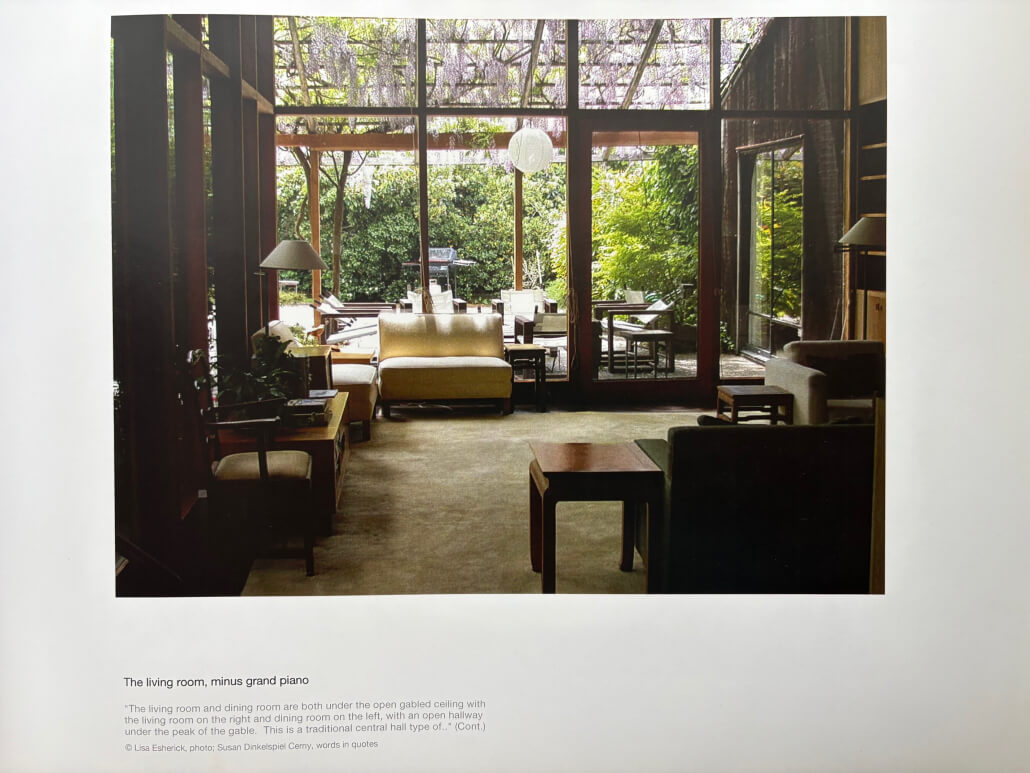
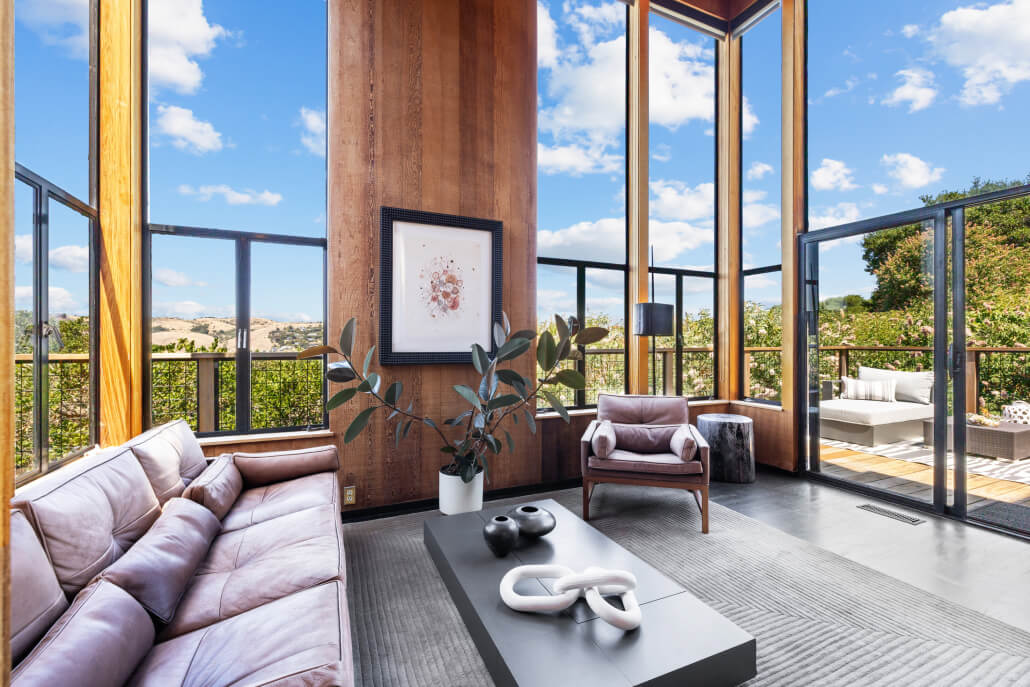
The Stunning Living Room at 11 Crest Road in Belvedere
As a fan of mid-century modern architecture, I was aware of his body of work and was thrilled when I was hired to represent 11 Crest Road in Belvedere, pictured above. Upon first arrival, I immediately knew it was a home with architectural provenance and thoughtful design, from the way the home is positioned on the property, to the home’s proportions and layout and its integration with the natural landscape.
This beautiful home made me want to learn more about this great architect, especially since he was instrumental in designing Sea Ranch, one of my favorite coastal locations in California.

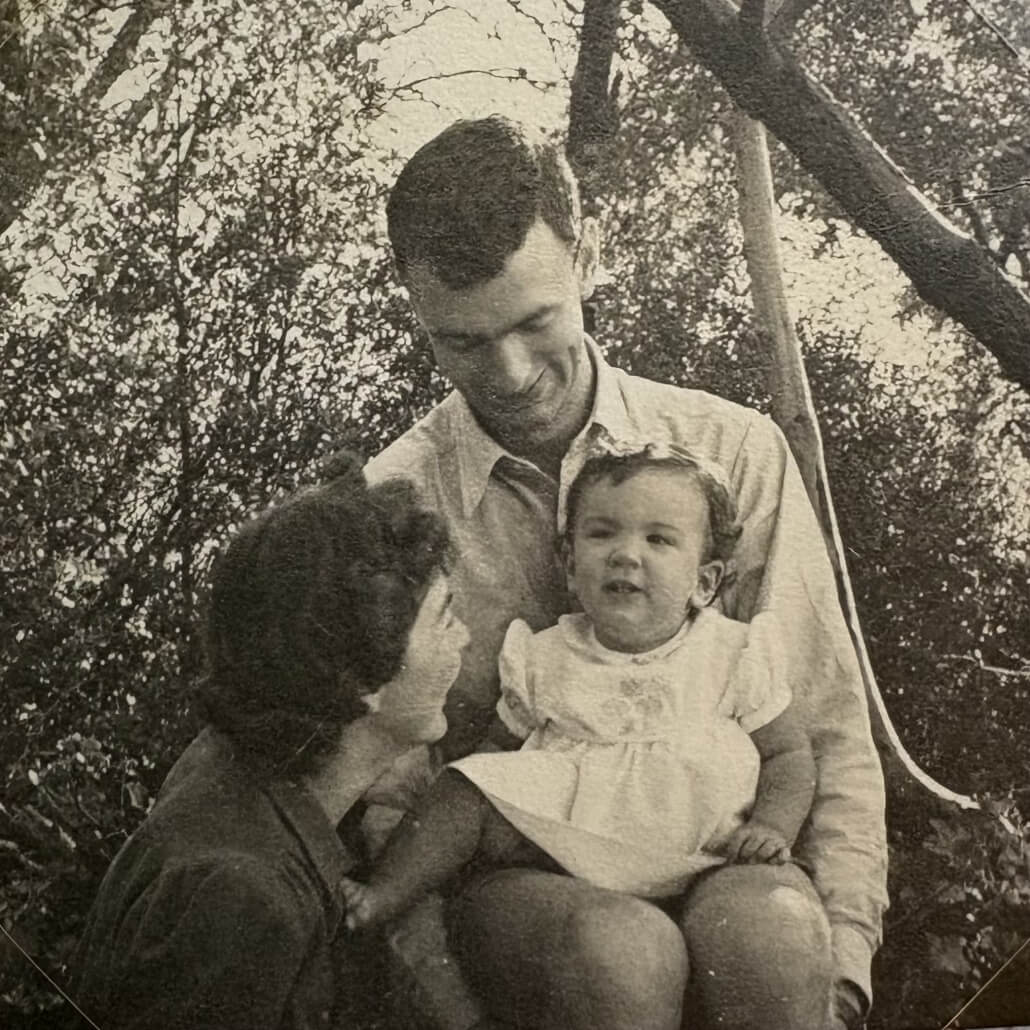
Architect Joseph Esherick, Courtesy of the Esherick Family
It was a true pleasure welcoming Milena Esherick, granddaughter of renowned architect Joseph Esherick, along with her friends, including architect Chad DeWitt—an Esherick enthusiast and proud owner of one of his early Sea Ranch residences. They were all struck by how faithfully the home has preserved its original design integrity. From the signature Esherick architectural details to the elegant proportions, seamless spatial flow, and serene site orientation, the residence embodies the timeless quality that defines Esherick’s work.

Early Life and Architectural Ethos
Born in Philadelphia in 1914, Joseph Esherick grew up in a family surrounded by the arts. His uncle was the famed furniture maker and artist Wharton Esherick who had an influence on Joseph’s path. Wharton Esherick’s home and studio are now a museum in Pennsylvania. Joseph’s own education in architecture began at the University of Pennsylvania, where he graduated in 1937.
Trained in the Beaux-Arts tradition but increasingly drawn to a more modern, climate-sensitive approach, he moved to the San Francisco Bay Area in 1938 and soon began practicing architecture independently.
In 1946, Esherick founded his own firm in San Francisco. Over the years, this practice evolved into Esherick Homsey Dodge and Davis (EHDD), one of the most respected architectural firms on the West Coast. He joined the faculty at UC Berkeley in 1952 and remained a central figure there for over three decades, eventually serving as Chair of the Department of Architecture.
Esherick’s architectural philosophy was deeply rooted in site sensitivity, natural light, livability, and regional character. He rejected flashy or monumental gestures in favor of timeless, context-responsive solutions. His projects are known for their exquisite proportions, thoughtful detailing, and the seamless way they harmonize with the California landscape.
One example of his thoughtful design at 11 Crest Road in Belvedere is the wood benches (pictured below) integrated with the front entry, providing visitors and residents alike a convenient place to remove shoes and transition between the beautiful gardens and the striking interior of the home.
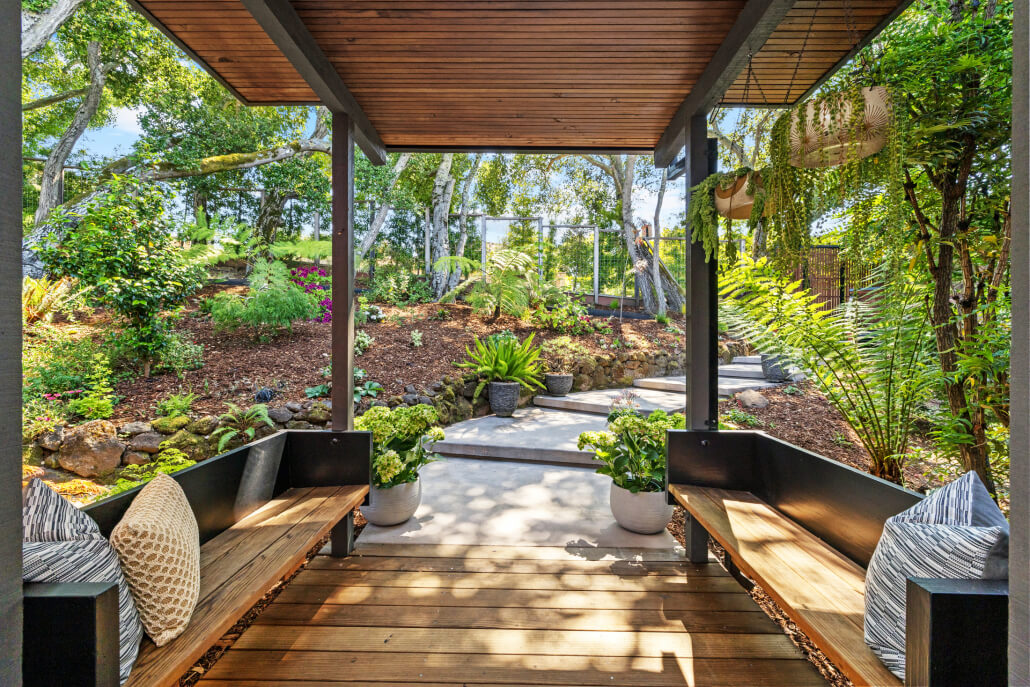
Esherick Designed Incorporated Seating Into His Design at 11 Crest Road to Ease the Transition Between Indoors and Outside
Residential Architecture: A Language of Place
Much of Esherick’s early acclaim came from the homes he designed throughout the Bay Area. These include modernist residences in Belvedere, Kent Woodlands, San Francisco (Sea Cliff and other areas), Oakland, and the Peninsula. His houses are often sited to maximize privacy and views, employing natural materials, deep overhangs, and finely tuned floor plans that reflect both lifestyle and landscape.
A prime example is what was originally called the Leod House at 11 Crest Road in Belvedere, designed in 1961. This Mid-Century Modern residence captures sweeping views of the San Francisco Bay while embracing its garden setting with characteristic restraint and grace. With its low-slung horizontal lines, overhanging eaves, and floor-to-ceiling windows, the Leod House exemplifies Esherick’s belief that buildings should serve their inhabitants and honor their surroundings.
Other notable residences include homes in Oakland’s Claremont Hills and a collection of refined ranch-style homes in Atherton and Portola Valley. While each residence was unique, they shared an emphasis on proportion, natural light, and material honesty. Esherick’s attention to detail extended to everything from custom cabinetry to the placement of doors and windows, all designed to enhance the quality of daily living.

Sea Ranch and the Rise of Regional Modernism
One of the most celebrated chapters of Esherick’s career was his involvement in the Sea Ranch project in Sonoma County. As one of the original designers invited to shape this groundbreaking coastal community in the early 1960s, Esherick helped establish an aesthetic that would become synonymous with California regional modernism.
His designs for Sea Ranch homes used wood shingles, modest forms, and sheltered courtyards to create buildings that could withstand coastal winds while blending into the landscape. Esherick’s work at Sea Ranch embodied the project’s broader environmental ethos and demonstrated how modern architecture could be both innovative and respectful of nature.
His work at Sea Ranch inspired me early on to buy a coastal home designed by Carson Bowler, who worked in Sea Ranch and other areas of the Sonoma Coast, inspired by the groundwork that Esherick laid.

Architect Joseph Esherick’s Famed Monterey Bay Aquarium
Institutional and Public Works
Though widely known for residential work, Esherick made equally significant contributions to public architecture. His firm’s most iconic project is the Monterey Bay Aquarium, completed in 1984 by EHDD and led by Chuck Davis. Built on the site of a former sardine cannery, the Aquarium pioneered a new model of immersive and educational public space and remains one of California’s most beloved civic institutions.
Other key institutional projects in the Bay Area include academic buildings at UC Berkeley and UC Santa Cruz, libraries, and small-scale commercial buildings. These projects reinforced Esherick’s belief in architecture as a humane and enduring civic art. His designs often balanced rigor with approachability, demonstrating that public buildings could be welcoming as well as architecturally significant.

Architect Joseph Esherick Mentored Generations of Architects at UC Berkeley
Teacher, Mentor, and Innovator
Esherick’s influence extended beyond his buildings. At UC Berkeley, he mentored generations of architects, many of whom went on to shape the built environment across the country. His design studios emphasized critical thinking, sensitivity to site and climate, and an ethic of service to community.
He also advanced the idea that architecture could be both regionally rooted and intellectually rigorous. His work was not driven by theory or fashion, but by a practical and poetic understanding of how people live and interact with their environment.

10 Acorn Way in Kentfield, Courtesy of the Esherick Family
Legacy and Recognition
Joseph Esherick received numerous accolades during his lifetime, including being named a Fellow of the American Institute of Architects in 1965 and receiving the AIA Gold Medal in 1989—the organization’s highest honor. He died in San Francisco on December 17, 1998, at the age of 83.
His contributions to Bay Area architecture live on in the homes, public buildings, and campuses he helped shape. Today, Esherick’s buildings are increasingly appreciated for their timeless quality, environmental responsiveness, and understated elegance. In an age of spectacle and speed, his work reminds us of architecture’s quieter virtues: restraint, thoughtfulness, and enduring beauty.
Whether designing a stunning hillside retreat like 11 Crest Road in Belvedere or a major public institution, Joseph Esherick approached each project with humility, care, and a deep love for the land he called home. His contributions have not only shaped the visual landscape of the Bay Area but have helped define what it means to build and live well in California.


My Instagram Feed







Find Me on Facebook!
Thomas Henthorne, Marin County Real Estate Agent & Marin Realtor


Thomas Henthorne

|
|
+1.415.847.5584
thomas@thomashenthorne.com
Top Marin Real Estate Agent
DRE# 01892608
|












Leave a Comment
What do you think?Please leave your comment below!